Creating the perfect backyard putting green in Phoenix requires more than just imagination—it requires the right type of artificial turf. The intense desert heat, low humidity, and dry soil in the region make it essential to choose a turf that not only performs well for putting but also stands up to the challenging climate. In this blog post, we’ll explore the best turf types for artificial putting greens in Phoenix, what to look for, and why some options outperform others.
Why Turf Type Matters in Phoenix
Artificial putting greens are designed to simulate real grass while offering consistent ball roll, low maintenance, and long-lasting beauty. However, not all synthetic turfs are created equal. Phoenix’s arid climate means your turf must resist heat, UV radiation, and wear and tear from sun exposure. Choosing the right turf helps ensure that your putting green remains functional and attractive throughout the year.
Key Factors to Consider
Before diving into specific turf types, it’s helpful to understand the key features to look for when choosing turf for Phoenix putting greens.
UV Resistance
Phoenix sees over 300 days of sunshine annually. A high-quality putting turf must be UV-stabilized to prevent fading, cracking, or weakening over time.
Heat Resistance
Artificial turf can become hot under direct sunlight. Look for options with heat-reflective technology or cooling infill materials that help manage surface temperature.
Pile Height and Density
For putting greens, a low pile height—usually between 0.375″ and 0.625″—is ideal. This height supports a smooth ball roll. High-density turf mimics the feel of natural bentgrass and enhances durability.
Drainage Capabilities
While Phoenix is dry most of the year, monsoon season can bring heavy rains. Turf with proper drainage backing will prevent puddling and promote quicker drying times.
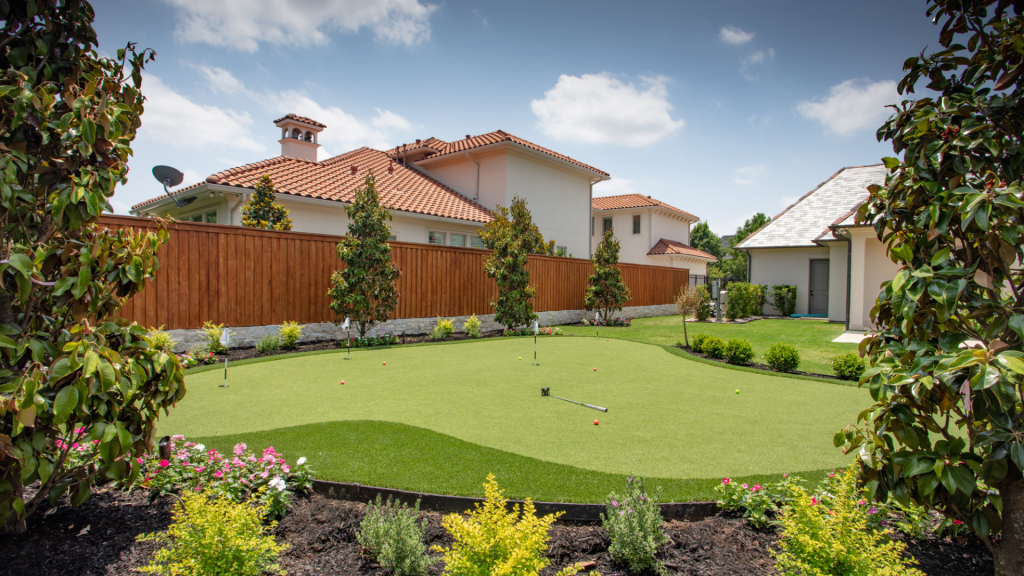
Top Turf Options for Phoenix Putting Greens
Nylon Putting Turf
Nylon is one of the most durable synthetic fibers on the market. It’s heat-resistant, maintains its shape under pressure, and offers a consistent ball roll. While it can be pricier than other options, nylon putting turf performs exceptionally well in Phoenix’s extreme temperatures. It holds up to foot traffic and resists flattening, making it ideal for dedicated golfers who want a professional-level green.
Polypropylene Putting Turf
Polypropylene is a popular, budget-friendly choice for residential putting greens. While not as durable as nylon, advancements in manufacturing have improved its quality. Polypropylene turf can be tufted densely to create a smooth, fast surface. However, it is more susceptible to heat damage than nylon, so it’s best used in shaded areas or with heat-reflective infill to reduce temperature buildup.
Polyethylene Turf (For Fringe Areas)
While polyethylene is not typically used for the putting surface itself, it’s a great choice for fringe or chipping areas surrounding the green. It mimics the look and feel of natural grass, offering a soft touch and excellent color retention. Combining polyethylene turf with nylon or polypropylene greens creates a more realistic and versatile short game experience.
Best Practices for Turf Installation in Phoenix
Choosing the right turf is just one part of the equation. Proper installation is key to ensuring your putting green performs well and lasts for years.
Base Preparation
A well-compacted, permeable base made from crushed rock or decomposed granite allows water to drain and prevents surface shifting.
Seam and Edge Protection
Phoenix’s temperature swings can cause expansion and contraction. Using quality seam tape and edging materials will help prevent turf from lifting or separating.
Infill Selection
Silica sand or specialized putting green infill adds weight to the turf, improves surface smoothness, and can help with heat management. Be sure to choose infill that complements the turf type and supports consistent ball roll.
Final Thoughts
Creating an artificial putting green in Phoenix is a smart investment for golf lovers and homeowners looking to upgrade their outdoor space. With high-quality turf types like nylon and polypropylene, and proper installation techniques, you can enjoy year-round putting practice without the hassle of lawn care. By considering the region’s specific climate challenges and choosing turf that’s built to withstand the sun, you’ll have a green that looks great, performs well, and stands the test of time.
 Lawn Lift